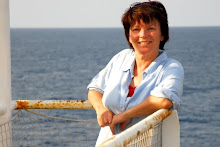
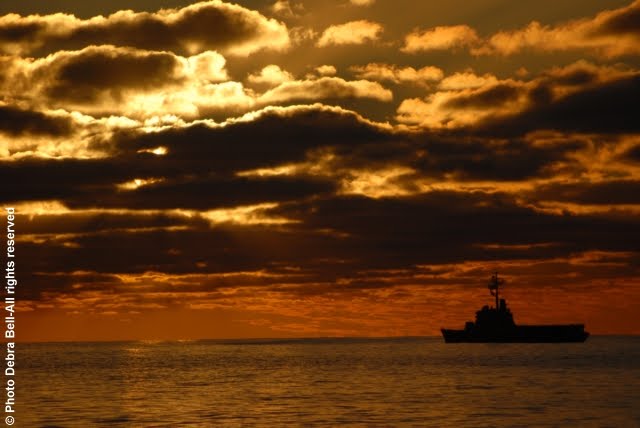
My service with Mercy Ships on the m/v Africa Mercy

Please join me on my African Mercy Mission! Photos: Debra Bell

Email: dbafricajourney@gmail.com /
blog: http://debonroad.blogspot.com/
Phone the ship: 1-954-538-6110 - ext 1610

Proverbs 31:8-9 “Speak up for those who cannot speak for themselves, for the rights of all who are destitute. Speak up and judge fairly; defend the rights of the poor and needy.”

Who Is Mercy Ships? http://www.mercyships.org/
Mercy Ships, a global charity that has operated hospital ships in developing nations since 1978, is the leader in using ships to deliver free world-class health care and community development services to the world's forgotten poor. Mercy Ships has chosen to follow the 2,000 year-old model of Jesus: the blind see, the lame walk, the mute speak. Mercy Ships brings hope and healing to the forgotten poor by mobilizing people and resources worldwide, and serving all people without regard for race, gender, or religion. The newest vessel the m/v Africa Mercy is the world's largest charity hospital ship, with six operating theatres, 78 hospital beds and crew of 450 + volunteers. Ship specs: length-152m, breadth-23.7m
(for more info go to my Jan 2011 archive: MERCY SHIPS and the m/v AFRICA MERCY HISTORY: 1/14/2011 update)

PARTNERSHIP WITH DEBRA: Please prayerfully consider partnering with me as I serve the ministry of Mercy Ships and the forgotten poor of the nations of West Africa. I am the ship's photographer, capturing impacting visuals that enable Mercy Ships to share with the world the hope and healing of a better life for the people of West Africa. We as volunteers are required to raise funds for participation in Mercy Ships project expenses such as crew fees and living expenses. Your donations, prayers and encouragement will make a great difference in the lives of the people we serve. It will allow me the honor to partner with you and enable me to continue serving long term with Mercy Ships. Thank you to those who have blessed me with friendships, partnerships & prayer support. Many lives have been changed including my own. For this I am eternally grateful.

OPTIONS FOR DONATING:
1) Donate Directly On Line
2) Send tax-deductible checks payable to Mercy Ships, indicate on a separate note donation for Mercy Ships Project #2077

CANADIAN Donations mail checks to:
Donor Services, Mercy Ships Canada, #5-3318 Oak St, Victoria, BC, Canada, V8X 1R1, Toll Free ph: 1-866-900-7447 /
To set up credit card or debit donations: Ph: 250-381-2160
web:
www.mercyships.ca / email: msca@mercyships.ca
(Identify donations with Project #2077)

CANADIAN Direct ON LINE Donations click here:

http://mercyships.donorpages.com/MERCYGIFTS/DebraBell: (Identify donation by Project #2077)

USA & other Country Donations mail checks to:
Donor Services, Mercy Ships Shipmates, Box 2020, Lindale, TX, USA, 75771, Ph: +1-903-939-7190
(Identify donations with Project #USMS2077
USA Toll Free ph: 1-800-772-7447 www.mercyships.org /

USA & other Country Direct ON LINE Donations click here:
https://connect.mercyships.org/page/outreach/view/crewmates/Debra

Mercy Ships Crew Mates -Debra's Bio Donate-Contribute Now. (Identify donation by Project #2077)

Sunday, December 11, 2011

SIERRA LEONE-Ramatu Koroma-I was in hiding...

Ramatu before surgery

Ramatu after surgery

Ramatu Koroma
“They called me a witch!” said Ramatu, raising her voice in a mixture of anger and despair. “They ran from me because they said I was demon-possessed!”

Ramatu recovers 4 weeks after surgery
 The growth that encompassed her nose and mouth greatly distorted her features, making speaking an effort. This very gentle woman explained that the problem started about ten years ago, right after the end of Sierra Leone’s civil war. A tiny boil began to grow on her nose. As it grew, both sides of her nose and her upper lip swelled. Because of this deformity, her husband abandoned her and their little daughter. Her friends were afraid they would “catch the sickness.”  “Only my brother didn’t abandon me. All the rest disappeared,” she said sadly.

Ramatu 5 weeks after surgery
 She had been a farmer, selling her potatoes in the market. But people stopped buying from her. She was reduced to begging on the street to support herself and her daughter.At church, she used to collect the offering. “But I’m ashamed to do that now,” she said, with her head bowed. Sitting quietly and unobtrusively in the service became her habit.
Then she heard people in her village talking about free surgeries offered by Mercy Ships in Freetown. A glimmer of hope flickered in her mind. Maybe … just maybe this was her chance to have a normal face. She summoned the courage to go to a medical screening and soon found herself in the hospital ward onboard the Africa Mercy.
Ramatu makes friends at the Hope Center where she recovers
The volunteer surgeons removed the hideous growth, revealing the real Ramatu. When she saw her face in the mirror, a dramatic change of expression swept over her features. Even with the bandages, she could see that her face carried no trace of her shame. As the swelling from the surgery diminished, her features gradually returned to normal. No longer did she hang her head in shame. In fact, Ramatu smiled all the time! Her warm and loving personality flourished as she welcomed interaction with others.
She recovered in the Mercy Ships HOPE Center, a facility conveniently located just a short distance from the ship. She returned to the Africa Mercy often for post-operative care.  When the scars healed, she was released to return home.
Ramatu had spent ten lonely years living in humiliation. Now, she had a bright future and was anxious to begin it. The many friends she made while in the care of Mercy Ships gave her a new self-confidence. Before leaving, they surrounded her with their loving good wishes.  “The people in your village won’t know you,” they said.  “It’s amazing! You look so beautiful!”

"I was in hiding, and now Mercy Ships has brought me out."
 “Mercy Ships has made me beautiful,” she said. “After the surgery, everybody is now thankful to God. They are all saying, ‘Ramatu, you are with God.’ I was in hiding, and now Mercy Ships has brought me out. I am comfortable with people. I am very much bold to face people. I am blessing God for Mercy Ships and praying that whatever you desire for Mercy Ships will come to pass. Thank you.”
Photos by Debra Bell / Story by Elaine B. Winn

SIERRA LEONE-Aminata King-Revisted Transformation

SIERRA LEONE: Aminata King: Revisited Transformation
Aminata warmly welcomed Sandy, throwing her arms around her friend of almost 20 years. Sandy beamed and hugged her back. Their friendship began in 1992 when Sandy was a volunteer on the Anastasis, and Aminata was a patient onboard the hospital ship.                                                 It is difficult to believe that Aminata, a gracious and gentle woman, was known as “the witch of Freetown” when they first met. Her neighbors thought the grapefruit-sized growth on her jaw was the result of an evil spell. As it grew, she became increasingly isolated from family and friends. The growth destroyed her clothing business, her marriage, her family and her life. Her husband left, her friends turned their backs on her, and customers wouldn’t even buy peeled oranges from her in the street.
Poor, sick and friendless, she prayed to Allah for help. When help was not forthcoming, she found warm acceptance in a nearby church. The grace and supportive love shown to her there won her heart, and Aminata gave her life to Jesus.
One night, she dreamed of a big white ship.  In her dream, Jesus healed her using the people on that ship. A few months later, the Anastasis arrived. The volunteer surgeons onboard removed the tumor and installed a titanium jaw. Several surgeries were required to do all that was required, giving Sandy and Aminata more time for their friendship to grow.
Aminata’s community was astonished when she returned home after the surgery. Everyone thought she would die, but she came back healed. “Because of the miracle, they were fighting to see her,” said Felix, Aminata’s new husband. “They wanted to touch her. Before the surgery they would spit on her – but not now!” he said.
Sandy eventually served eight years with Mercy Ships and then returned to Sierra Leone in 2002 to visit her dear friend. Over the years, Aminata had grown in her faith.  She spoke of her gratitude to God, who had sustained her and her family, even through a violent civil war. In fact, on one occasion, rebel soldiers had held her at gunpoint.  “Jesus kept us safe,” she said simply.              
Now, Sandy is back in Sierra Leone once again, this time serving in the dining room onboard the Africa Mercy, docked in Freetown. This ten-month field service offers an opportunity for the two friends to enjoy each other’s company – beginning with a visit to Aminata’s home. Aminata warmly welcomed Sandy into her living room, and they immediately began catching up on the events in each other’s lives.
Much has changed in Aminata’s life since she last visited with Sandy. She and her husband have moved from the tiny, cramped corner of one room to larger quarters in another part of town.  Now they have enough bedrooms for Felix’s 18-year-old daughter Felicia, as well as  15-year-old Murray and 9-year-old Sorie. Sorie was born to Aminata’s brother. Since he already had a son, and Aminata was childless, he gave Sorie to Aminata to raise.  Murray was Aminata’s sister’s son.  He was found lost in the bush with his grandmother after his mother was killed during the war.       
Felix and Aminata are building a life of faith together. Felix was born into a Muslim family but says, “I found God; there is no other God, only Him.”
The conversation drifted to years gone by and wonderful memories that Aminata cherishes – such as when crew members built a concrete store where she sold her provisions. She ran a very successful business there for three years until her parents got sick. Aminata spent her money on doctor bills for them. “By the time they died, the money was all gone,” she said wistfully.
She no longer sells in the market because there is no money to buy product to sell. Felix was an upholsterer, but can’t operate the sewing machine anymore because of a problem with his back. Aminata and Felix hope to be able to send Felicia to university if they can find the funds. They want to set up a business in Guinea, which is a free port where products cost less. This would allow them to sell in Sierra Leone for a larger profit. “We have to keep the family together,” declared Felix. “That’s the work of the father.”

  
When Aminata produced a large plastic drinking mug bearing the Mercy Ships logo, they all began to laugh. Although it had melted on one side and was no longer usable, Aminata had kept it. When the rebels attacked their home during the civil war, they tried to burn down the house. But the flame landed on the Mercy Ships mug and melted it, thus saving their home. What could have been a disaster is now a chuckle. “We thank God for His protection,” said Aminata.


After admiring photos of family members and offering a prayer of thanks, Aminata and Sandy walked hand-in-hand to the Mercy Ships vehicle. They made plans for another visit and shared one last hug before parting. The friendship that began almost twenty years ago has made a tremendous difference in their lives, and they are nurturing that friendship. It is a treasure that grows more valuable with each passing year.
“Friendship is a single soul dwelling in two bodies.” – Aristotle
Photos by Debra Bell / Story by Elaine B. Winn

SIERRA LEONE-ISATU KONTEH-Cleft Lip

Isatu Konteh-Cleft lip – SIERRA LEONE 2011

For the better part of a day, Isatu sat on her hospital bed staring at the reflection of her face in the small mirror in her hand.  Despite the three thin strips of translucent bandage, she could see that the volunteer doctors on the Africa Mercy had corrected the cleft lip that had kept her isolated from people her whole life. She was amazed! She could hardly grasp the fact that she would now smile like everyone else.
Isatu was born with a cleft lip that created an unpleasant, even angry, expression on her face. It disrupted her upper lip and front teeth . . . and her entire life.  Isatu had spent her thirteen years at home, helping her mother keep house for the family, which included a sister and two brothers. Since West African culture views deformities as a sign of a curse, the cleft lip prevented Isatu from making friends and going to school. Would she ever be able to have a real life? 
Then hope appeared in the form of a radio advertisement. A Mercy Ship was coming to Sierra Leone, bringing surgeons who could fix cleft lips.  Isatu was delighted.
At the Mercy Ships medical screening, Isatu’s father described her as a very friendly girl who is a big help at home.  But she sat expressionless as he spoke.  Her father answered all questions for her. Quiet and withdrawn, she did not speak to anyone – a defense mechanism learned from years of being shunned.
Isatu was the first patient to receive the priceless appointment card for cleft lip surgery in the Sierra Leone Field Service. And what a difference the surgery made in her life!  Almost overnight, she was transformed from a very somber young lady to one who giggled about everything. She bloomed like a lovely flower, making friends among the patients recuperating in the ward. The successful cleft lip surgery gave her a whole new perspective on herself and on her life . . . evident in the beautiful new smile she generously bestowed on everyone.
When Isatu’s brother arrived to take her home, his delight with her successful surgery was obvious. He hugged her, and she reveled in his attention. He even revealed that because of the difference the surgery made, Isatu’s father, plans to enroll her in adult education classes, followed by training to become a seamstress. Isatu beamed as she realized she would soon be preparing for a productive life.
With pride and affection, her brother said, “Now she can get married and have a family.” Getting married and having children is of prime importance to young women in Sierra Leone – a goal previously prohibited by Isatu’s cleft lip.
It is no wonder Isatu’s first words after surgery were, “I’m happy now.”
                  
Photos by Debra Bell / Story by Elaine B. Winn  

Friday, June 10, 2011

SIERRA LEONE-SHEKU OVERCOMES OBSTACLES

Sheku Conteh
Sheku Conteh is a valued member of the Africa Mercy’s Engineering Team. He is well-respected as a man of great integrity, who has overcome great obstacles to live his dreams. He treasures every blessing in his life as a gift from God.
Reflecting upon the dramatic changes in his life, Sheku gazes thoughtfully at the sea. Then his gaze becomes more intent as he says, “To understand what has happened to me, you need to know my story.”
His story starts in Sierra Leone in 2002, after the war. A boil appeared on his face. His mother prayed for him daily while cooking African herbs to make an ointment which she gently pressed onto his wound. But his condition worsened.
Eventually the growth developed into a facial tumor. With each day, it became more challenging for Sheku to lead a normal life in his community, where such deformities are viewed with distrust and fear.
To make life even more difficult during the next year, violence erupted again. Many atrocities occurred, and Sheku’s home was burned down by rebels. He and his family went to live in a camp, and as time passed, the plastic shelter became home for them.
In 2002, Sheku passed by a Mercy Ships local office on his way home from school. A day-volunteer ran into the street and called to him, “What is wrong with you?” Sheku was initially quite stunned by this sudden outburst. However, within minutes, he was offered an opportunity that would save his life. He was presented with an appointment card to visit Mercy Ships when the hospital ship, the Anastasis, arrived. Although the ship’s exact arrival date was unconfirmed, he went home with a newfound hope that gave him the determination to attend school in spite of the taunts he endured from other students.
During 2002, Sheku’s health deteriorated until one day he was rushed to the hospital with pain and respiratory difficulties. There was nothing they could do for him. His only option was to pray for Mercy Ships to arrive quickly – to save his life. He was only 14 years old.
Finally, he heard the long-anticipated radio announcement – the hospital ship had arrived in Freetown to offer free surgeries!
On the day of the medical screening, Sheku awoke very early, while it was still dark. At the stadium his mother held him close as they stood in line. Unexpectedly, they were taken straight to the doctors for diagnosis. To their surprise, Sheku was offered treatment. It was hard to comprehend that his time for healing had arrived. He felt apprehensive and insecure, without any strong foundation of faith to calm him.
During Sheku’s medical assessment, he noticed a Mercy Ships volunteer watching him. Sheku recalls, “I was so angry to be stared at.” Little did Sheku know that this man would be the catalyst for radical changes in his life.
Not long afterward, Sheku heard a man shouting his name in the street. He cautiously ventured outside. It was Chris, the man who had ignited his anger during the screening. Sheku exclaimed to his mother, “Someone is coming for me!”
As Chris learned more about Sheku’s journey to find treatment, he soon became a regular visitor to Sheku’s home. A wonderful benefit of this attention was that the local bullies were very impressed by the white man’s friendship for Sheku and quit mistreating the boy.
In the following weeks, Sheku’s pain increased. He prayed that his life would be spared long enough for him to receive the operation from Mercy Ships. He silently hid in his house – afraid that if he ventured outside, someone would use witchcraft to curse him and hasten his death.
Ironically, on New Year’s Day in 2003 – a day that usually symbolizes hope for the future year – Sheku sat quivering with anxiety and pain. He sadly recalls, “I was feeling pain. Praying. Nervous about having surgery, in case I did not survive.”
Mercy Ships volunteer surgeons successfully removed the core of the massive tumor. The surgery also freed Sheku from his fear of imminent death. He realized that he actually had a future! His new friend Chris decided to brighten that future by sponsoring Sheku’s school attendance until he was 16 years old.
Time flew by, and in 2004 Mercy Ships returned to Sierra Leone. Sheku enjoyed seeing his friend Chris again. After visiting the plastic shelter that was still serving as home for Sheku and his family, Chris purchased housing for them and provided funding for the young man to continue his education.
After thoughtful consideration of his discussions with Chris, Sheku put his faith to the test by attending the Discipleship Training School (DTS) in Ghana in 2009. This radically transformed his uncertainty into a deep, reassuring faith. He reminisces, “It was really great. I became closer to God. I could see God working.”
By the end of his training, the global economy was in a slump. However, Chris continued to support Sheku. One day, Chris asked Sheku, “What do you want to do with your life now?” Sheku wanted to attend college to study medicine. Chris investigated a more feasible option – working onboard the hospital ship in Engineering with Chief Engineer, Andy Cole. This work was due to start very soon. In light of this new option, Sheku fervently prayed throughout the night. The next morning he received a golden opportunity. Blinking in disbelief, he read an email offering him a six-month job as a day-volunteer in engineering onboard the Africa Mercy in Togo!
Sheku embraced the God-sent opportunity. He left his family’s home to live on his own for the first time, with Chris graciously supplying the accommodation. And, for the first time, Sheku was really living by faith. He worked diligently, declaring, “It’s all in the heart and attitude.”
Opportunities continued to unfold. After only two months, he was offered an apprenticeship as an engine hand with Mercy Ships. This was the launch of his career.
Next, Sheku had his long-awaited final surgery – the Iliac Crest Bone Graft (ICBG) procedure. There was no longer any trace of his disfigurement! By December 2010, Sheku’s onboard training had been completed and certified by the Engineering Department. The 21-year-old was promoted to Motor Man onboard the Africa Mercy.
Sheku has come a long way since he first met Mercy Ships. He reflectively comments, “One day I dreamt I might come back to work with Mercy Ships if I’m rich and retired … now I’m aiming to be an engineering officer aboard the ship.” He has also helped his family to build their own home on a plot of land provided by Chris.
To a large degree, Sheku attributes his successes to the continuing loyal support and guidance from Chris and Mercy Ships. However, ultimately, the most dramatic change in his life came from his willingness to follow Jesus. He declares, “I have this important message. My testament in faith will bring hope to transform lives and bring people to Mercy Ships. God is with us at all times – and with this knowledge, hope will come to fruition.”

Story by Claire Ross
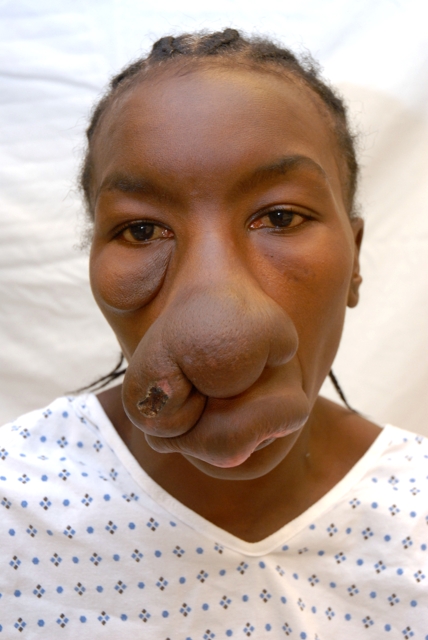
SIERRA LEONE-REVISITING JOSEPH

Looking very sharp in his Boy Scout uniform, nine-year-old Joseph Fofanah stepped up to accept his country's flag. Then he marched crisply to place it in the stand, saluted, and retreated smartly. It was appropriate that this young man participated in the ceremony to welcome the arrival of the Africa Mercy in Sierra Leone.
Mercy Ships played a very important role in Joseph's life. He was born with a cleft palate and cleft lip. “He was having a problem,” said his mother, Isatu. “Any liquid we fed him would come back out his nose.”
This serious birth defect negatively impacts the lives of many African children. Fortunately, Isatu realized that her son needed a medical procedure to repair the cleft. However, the cost of the surgery was more than she and her husband could afford. “But the pastor and the doctor who delivered Joseph told me not to worry,” said Isatu. “A Mercy Ship is just on the way.”
Joseph had his first surgery in 2002, when he was almost four months old, and he received a second surgery the following year. He has no memory of his problem or of his Mercy Ships experiences, but the success of these procedures is evident in his brilliant smile.
Today, Joseph is a happy, active fourth-grader. His favorite subject is mathematics, which may have something to do with his ambition to be a banker one day. An avid football (soccer) enthusiast, he is the goalie on his school team, and enjoys playing with his younger brother, Joshua.
Scouting is very popular in Sierra Leone, and Joseph is a five-year member of Boy Scout Team 3. “I really love to march,” he says, and he's looking forward to camping with his troop.
When asked what he thought about being onboard the Africa Mercy , he grinned and exclaimed, “I'm excited, and I really want to stay here!”

Story by Elaine B. Winn
Photos by Debra Bell

SIERRA LEONE-PONSETI TRAINING

In West Africa, the birth defect commonly known as club foot is often thought to be the touch of the devil. The result of that fear is that babies with this problem are ridiculed and shunned, condemned to a dismal future.
Club foot is a condition present from birth in which the foot grows inward. Although the problem is widespread in West Africa, the deformity can be easily reversed by a series of casts developed by Dr. Ignacio Ponseti.
Mercy Ships physicians recommended using the Ponseti method in Africa. In the 2010 Field Service, Dr Frank Haydon directed the Ponseti Treatment Program with CNAO (the national prosthetic/orthotic center) in Lomé, Togo. For the 2011 Field Service in Sierra Leone, Dr. Haydon adapted the program to incorporate long-term sustainability through partnerships with Prosthetic Outreach Foundation (POF), Aberdeen Rehabilitation Centre, Handicap International, and Cure Clubfoot Worldwide. Significant practical training is offered to the existing partnered clinics. This allows for services to continue even after Mercy Ships has left the country.
The training program encompasses all aspects of the treatment – medical, resources, patient care, and sustainability of clinics. Dr Frank Haydon, assisted by Anna Vines, leads Train the Trainer events for local health care professionals. These events are dynamic and interactive – utilizing slideshows, videos, practical demonstrations with props, and group workshops to practice techniques.
The Program delivers theory, resolutions to common issues, and practical techniques. Step one emphasizes the importance of early diagnosis. The main objective is targeting children, 0-2 years old, when the bones are still forming. Early identification minimizes the prevalence of this condition in the adult population and improves the success of ongoing in-country treatment plans.
In the second stage the method of casting is described and practiced during the workshops. The casting phase is usually up to six casts per treatment. During each casting, the baby’s foot is physically manipulated by applying pressure to the corrected foot alignment. This is a gentle technique that does not cause pain for the babies.
Generally the complications are limited to circulation difficulties – a problem that is easily remedied. However, the most common reason for treatment failure is broken casts, so the program strongly addresses ongoing counseling with the babies’ caregivers.
Throughout the training, brainstorming is strongly encouraged. At one event, a topic of discussion involved applying chicken wire as an abrasive material to protect the casts because this can be easily supplied at a low cost.
Step three addresses achillotenotomy, the surgical procedure to sever the Achilles tendon. This is usually performed after the fourth or fifth cast. Each workshop begins with a discussion of sterilization before practicing surgery on a model to identify the “safe triangle” between arteries, nerves and tendons.
The topic of the final stage is the design and use of the Foot Abduction Braces (FAB). This is critical to prevent relapse after the casting phase. The braces were originally invented by Dr. Ignacio Ponseti. However, Dr. Frank Haydon has pioneered the introduction of foot brace molds in West Africa. The soft leather shoes are secured onto a metal bar at specific angles to maintain the correct foot position. For three months the braces are worn 23 hours a day. Afterward, they are worn at night for up to three years. The workshops demonstrate the simple, yet effective, tools to make the shoes.
In order to treat a full schedule of clubfoot patients, clear organizational processes are needed. So, the training program includes fundamental requirements for successful clinic management – setting up a new clinic, assessment of treatment plans, advertising options and patient care advice for the caregivers.
Bambino Suma (Clinical Manager, POF) highlighted the valued of the knowledge shared during the training program, saying, “There are more ideas for the future. It is a very good experience. I was able to see past mistakes and improve my knowledge. There is a higher, new scale of training from this Mercy Ships program.”
Story by Claire Ross

Photos Debra Bell

SIERRA LEONE-NAMINA NOMA NOMA (Part 1)

Chapter One: Dr. Sandra Lako helps a child in need
Born in The Netherlands, Sandra Lako’s childhood years took an adventurous voyage across the African seas. Her family took a leap of faith and committed to long-term mission work onboard the Mercy Ships hospital ship, the Anastasis.
They served mainly in the impoverished countries of West Africa. So, from the tender age of two, Sandra was immersed in a lifestyle of serving the needs of the most deprived communities in the poorest nations. This was the life she understood and embraced. She recalls life on the ship as being contented and sheltered in some ways. Attending the ship’s academy enabled her to develop confidence and to find fulfilment in educational achievement.
Sandra’s unique upbringing offered opportunities that ignited her passion for medical work. At fifteen, she helped with some medical teams onshore. There had been a measles outbreak which left a trail of devastation in the health of the local population. Her duties were to help feed the malnourished sick children. On her first day, she witnessed children dying. That moment forever changed her life. She says, “There was so little to do to help. I felt helpless. It triggered thoughts that, medically, to have skills would actively help.”
That thought led eighteen-year-old Sandra to leave the ship, return to The Netherlands, and complete her education to qualify as a doctor. First, she achieved the International Baccalaureate qualifications needed for medical school before attending Nijmegen Medical School. During her studies, she visited The Gambia for her internship (elective), and then she went to Tanzania in her final year at medical school. Both experiences confirmed her passion to use her medical skills to help the poor. Finally, she completed a diploma program at the Liverpool School of Tropical Diseases. Now, she was primed and ready to practice as a doctor in Africa.
Shortly afterwards, in March 2005, she was presented with an incredible opportunity. Mercy Ships was planning to open a land-based facility in Freetown, Sierra Leone. They required a doctor to set up a clinic, but the scope of the services to be offered was undecided. Dr. Sandra valiantly took on the responsibility and immediately set about researching the priority health services needed.
To identify the optimal use for the new facility, she explored the local health system by shadowing doctors in local hospitals. Despite urgent medical needs for all the local population, Dr. Sandra discovered some alarming statistics regarding the high mortality rate of children – 1 in 5 children do not reach the age of five years old. She convinced the local community leaders that there was an over-riding need to provide a clinic for children. In May 2005, the clinic opened.
Early in 2009 a very sick child arrived at her clinic suffering from a condition commonly known as noma. This malicious and aggressive bacteria destroys the flesh. For most sufferers, it results in death. In fact, there is a 90% mortality rate.
This case was unusual. The little five-year-old girl, Namina Yillah had survived the condition for two months. Although her fighting spirit had avoided death, the severity of her symptoms was evident. Her face tragically displayed a gaping hole lined with decomposing tissue. To make matters even worse, her significant malnutrition was an imposing threat to her recovery.
Although the case looked impossible to treat, Dr. Sandra repeatedly asked herself, “How can we help?” This positive approach demonstrates the optimistic outlook and the resilience in the face of adversity that is so intrinsically in the heart of Dr. Sandra. She carefully evaluated every option for success.
There were no immediate solutions. Fundamentally, Namina had survived against all odds. Dr. Sandra decided to treat the wound and change the dressing every day. This intensive treatment was accompanied with improving Namina’s general health by providing multi-vitamins and cartons of milk.
After six months of daily treatment, the infection cleared and the wound stabilized. Namina was finally ready to receive surgery to rebuild her face. However, the local medical teams had little expertise and no facilities to perform this type of surgery. Only Mercy Ships could provide the treatment Namina so desperately needed. So the daily treatment continued for the next 18 months while waiting for the Africa Mercy to come to Sierra Leone.
During that time, Namina’s health remained in a delicate state. She was vulnerable to contagious bacteria and suffered from several illnesses, including malaria and chest infections. Dr. Sandra recalls, “She was a very sad little girl. We had to wait until the end of the day to do her dressing changes due to the pain. She was so brave.”
Finally, they received the news they had anxiously awaited! The Africa Mercy had docked in Freetown. The hospital ship . . . and hope . . . had arrived!
To be continued . . .
Story by Claire Ross
Photos by Debra Bell