My service with Mercy Ships on the m/v Africa Mercy

Please join me on my African Mercy Mission! Photos: Debra Bell

Email: dbafricajourney@gmail.com /
blog: http://debonroad.blogspot.com/
Phone the ship: 1-954-538-6110 - ext 1610

Proverbs 31:8-9 “Speak up for those who cannot speak for themselves, for the rights of all who are destitute. Speak up and judge fairly; defend the rights of the poor and needy.”

Who Is Mercy Ships? http://www.mercyships.org/
Mercy Ships, a global charity that has operated hospital ships in developing nations since 1978, is the leader in using ships to deliver free world-class health care and community development services to the world's forgotten poor. Mercy Ships has chosen to follow the 2,000 year-old model of Jesus: the blind see, the lame walk, the mute speak. Mercy Ships brings hope and healing to the forgotten poor by mobilizing people and resources worldwide, and serving all people without regard for race, gender, or religion. The newest vessel the m/v Africa Mercy is the world's largest charity hospital ship, with six operating theatres, 78 hospital beds and crew of 450 + volunteers. Ship specs: length-152m, breadth-23.7m
(for more info go to my Jan 2011 archive: MERCY SHIPS and the m/v AFRICA MERCY HISTORY: 1/14/2011 update)

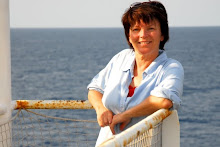
PARTNERSHIP WITH DEBRA: Please prayerfully consider partnering with me as I serve the ministry of Mercy Ships and the forgotten poor of the nations of West Africa. I am the ship's photographer, capturing impacting visuals that enable Mercy Ships to share with the world the hope and healing of a better life for the people of West Africa. We as volunteers are required to raise funds for participation in Mercy Ships project expenses such as crew fees and living expenses. Your donations, prayers and encouragement will make a great difference in the lives of the people we serve. It will allow me the honor to partner with you and enable me to continue serving long term with Mercy Ships. Thank you to those who have blessed me with friendships, partnerships & prayer support. Many lives have been changed including my own. For this I am eternally grateful.

OPTIONS FOR DONATING:
1) Donate Directly On Line
2) Send tax-deductible checks payable to Mercy Ships, indicate on a separate note donation for Mercy Ships Project #2077

CANADIAN Donations mail checks to:
Donor Services, Mercy Ships Canada, #5-3318 Oak St, Victoria, BC, Canada, V8X 1R1, Toll Free ph: 1-866-900-7447 /
To set up credit card or debit donations: Ph: 250-381-2160
web:
www.mercyships.ca / email: msca@mercyships.ca
(Identify donations with Project #2077)

CANADIAN Direct ON LINE Donations click here:

http://mercyships.donorpages.com/MERCYGIFTS/DebraBell: (Identify donation by Project #2077)

USA & other Country Donations mail checks to:
Donor Services, Mercy Ships Shipmates, Box 2020, Lindale, TX, USA, 75771, Ph: +1-903-939-7190
(Identify donations with Project #USMS2077
USA Toll Free ph: 1-800-772-7447 www.mercyships.org /

USA & other Country Direct ON LINE Donations click here:
https://connect.mercyships.org/page/outreach/view/crewmates/Debra

Mercy Ships Crew Mates -Debra's Bio Donate-Contribute Now. (Identify donation by Project #2077)

Monday, November 29, 2010

Mercy Ships EYE CLINICS & SCREENING Oct-Nov 2010 South Africa

clip_image002[84]

Almost 23,000 people in South Africa’s Eastern Cape Province are unnecessarily blind; blind because they are not aware that cataract surgery can restore their sight. The 2010 Sabona Sonke Campaign, a three-phase plan of intervention, is in process at three area hospitals to offer a workable system at each site, to increase effective eye care to those with little or no access to medical care.

clip_image002[4]

The Mercy Ships team, headed by Dr. Glenn Strauss, surgeon and lead consultant, is teaming with The Fred Hollows Foundation South Africa, the Eastern Cape Provincial Department of Health and management professionals from each hospital to use the current resources most efficiently. The hospitals involved include the Port Elizabeth Hospital Complex, Nelson Mandela Academic Hospital, and Sabona Eye Centre in Queenstown. The program will be in effect for about three weeks at each hospital.

clip_image002[8]

At a meeting of those involved at the Nelson Mandela Academic Hospital in Mthatha, Dr. Strauss explained the importance of keeping the flow of patients constant. This requires that every part of the process must be working well within the system as well as outside. Outside obstacles include, among others, negative attitudes about eye treatment, and government stipends to the blind, which are often the only source of income.

clip_image002[10]

In addition to Dr. Strauss, the Mercy Ships team includes Kim Strauss, patient coordinator; Dr. Richard Newsom, eye surgeon and consultant; Glenys Gillingham, surgical nurse and head of the surgical team; Woody Hopper, consulting optometrist and head of screening; Robin Hopper, educational team leader, administrator and management coordinator; and Shannon Hickey, team member.

clip_image002[12]

Phase one of the program begins with assessment of the current

system, training of eye teams and an orientation in Mercy Ships Vision Training, and transporting of patients to hospital locations. The second phase calls for the training of ophthalmologists in the Mercy Ships expedited procedure of cataract removal, and the referrals of cataract patients to be received at the hospital sites. The final phase includes the cataract operations, assessment and debriefing of the cataract surgeries, and the continuation of the program at future sites.

clip_image002[16]

clip_image002[18]

clip_image002[24]

Screening sites for the Port Elizabeth program were held at Settlers, Uitenhage and Motherwell. The Queenstown screening sites for the Sabona Eye Centre were held at SS Gida Hospital, Aliwal North, Empilisweni and Cofimvaba. Butterworth, St. Elizabeth, St. Patrick and Madzikane kaZulu were the screening sites for the Program at Nelson Mandela Academic Hospital in Mthatha.

clip_image002[26]

Many cataract patients of Optometrist Tseli Khalatha, and others who gained knowledge of the program by word of mouth, crowded the screening site in Butterworth, hoping to have their sight restored. Mr. Khalatha was in charge of admissions at the screening, doing the initial check for cataracts and moving them onto the next step in the process of tagging appropriate patients for the surgery.

clip_image002[32]

Robin Hopper and Shannon Hickey did biometry testing, checking measurements inside the eye, and Woody Hopper used the slit lamp, a diagnostic tool for cataracts, the final step in the screening process.

Dr. Strauss is working closely with ophthalmologists at each location, and hopes this process will open doors to new strategies for addressing blindness that will

be duplicated easily in other areas.

clip_image002[34]

clip_image002[36]

clip_image002[40]

clip_image002[42]

clip_image002[44]

clip_image002[48]

Phase II - Eye Surgery

The Nelson Mandela Academic Hospital in Mthatha, South Africa, is a fine facility that stands ready to handle the medical needs of the community. However, there are obstacles that prevent the people from utilizing the hospital to full potential. First, there are many who need the medical services but can’t afford them; and second, the prevailing attitude is that the hospital is where one goes to die. This belief brings many to an early death who might otherwise be on the road to healing and good health once again.

clip_image002[54]

clip_image002[56]

clip_image002[58]

Medical professionals in the Eastern Cape region are working to eliminate these obstacles. The 2010 Sabona Sonke Campaign is one of their most successful efforts. This plan of intervention focuses on increasing effective eye care to those with no other medical access. The Mercy Ships team, under the leadership of Dr. Glenn Strauss, eye surgeon and lead consultant, is teaming with The Fred Hollows Foundation South Africa, the Eastern Cape Provincial Department of Health and management professionals from three area hospitals to use available resources to provide cataract surgeries to eliminate blindness among the poorest citizens, without charge.

clip_image002[64]

At the Mandela Hospital, candidates arrived by shuttle from the Butterworth screening site, and were prepared for cataract surgery. Dr. Strauss and Dr. Richard Newsom, eye surgeon and consultant, who have teamed to train surgeons in the Mercy Ships expedited procedure of cataract removal, joined Head Surgeon Dr. Carolina Salazar, Dr. Laveen Naidoo, and Dr. Thabo Matubatuba of the Mandela Hospital.

clip_image002[66]

The surgeries began, as Surgical Nurse Glenys Gillingham, head of the surgical team, started instruction with the hospital’s ophthalmic nurses in their new procedures to better assist the doctors. The expedited cataract surgery training proceeded throughout the day under the expert supervision of Dr. Strauss and Dr. Newsom.

clip_image002[68]

Dr. Salazar, who came from Cuba to work for a year in the South African hospital, is now completing her thirteenth year at the facility. “I love the work that he (Dr. Strauss) is doing,” she said. “It’s nice to have colleagues around. We all have the same purpose; to help patients,”

clip_image002[70]

clip_image002[72]

clip_image002[76]

clip_image002[78]

Mandoyisile Esther Ntanjana, one of the cataract patients, was totally blind. Her neighbor was also blind, but had recovered her sight after a similar surgery. The neighbor encouraged Mandoyisile to have the procedure. Zimasa, Mandoyisile’s daughter-in-law, came to visit her as she recovered in the ward. The brilliant smile that greeted her relayed her great joy after the successful surgery. Zimasa translated her mother-in-law’s excited words after the successful surgery. “I had a dark view before. Now I can see! I am happy!”

clip_image002[82]

Thursday, November 25, 2010

MERCY SHIPS DENTAL CLINICS SOUTH AFRICA: Oct – Nov 2010


clip_image002
Rovers on the winding roads to Bambanani to set up a one day clinic
clip_image004
( Me bottom left) Dental Team overlooking vast rolling hills of Bambanani
Arms were raised in jubilation and shouts of joy filled the air in the little Zulu settlement of Bambanini, when the Mercy Ships Dental Team passed through their gates for a day-long clinic. More than 125 people from the surrounding area had assembled, hoping for the opportunity to have a dentist examine their teeth and relieve the nagging pain they had been living with.
clip_image006
                               Bambanani mountain top
.clip_image008
4) Local store on the mountain tops
Although the Africa Mercy is in dry dock in Durban, the off-ship Dental Program continues around the rural areas of Kwa Zulu Natal, working in cooperation with the Kwa-Zulu Natal Department of Health. The team is bringing dental care and hygiene instruction to local hospitals and many remote Zulu villages that have no access to such care.
clip_image010
(top right) Me taking photos of the dental hygiene being taught to the crowds clip_image012
Crowds waiting to be seen at the dental clinic in Bambanani

For the duration of the Mercy Ships Dental program in the area, the hospitals have agreed to suspend charge. Hospitals in Appelsbosch, Montebello, Imbahlenhle, and Bethesda are the four area hospitals involved. Nine area clinics will be held before the program is completed.
Ms. NgcoboThokozani, Operational Manager of the Bambanini Clinic, said personal funds were used to buy time to ‘get the word out’ that the dental team was coming. Word of mouth passed quickly throughout the villages in the hills and valleys of Kwa-Zulu Natal. Gwala Zama said she was told of the clinic by a neighbor. “I live a long way away, but I came by the shortcut,” meaning she walked cross country, up and down the deep canyons, instead of by the long roads around them.
clip_image014
(Cntr) Ms. NgcoboThokozani, Operational Manager of the Bambanini Clinicclip_image016
The Dental Team extracting teeth from patients in Bambanani
“They came at 5 a.m. with the trucks,” said Ms. Thokozani. “Most of them are unemployed and they got here by asking the truck drivers for a lift. It will take time to go back.”
clip_image018
Dr Dag Tvedt-Mercy Ships Chief Dental Officer injects freezing into a patient’s mouth before tooth extractionclip_image020
Many had teeth that were decayed and rotted, causing constant pain. The Mercy Ships dentists extracted the decayed teeth and gave the grateful patients medication for the pain.
Very often, people aren’t aware that they can have fillings to save teeth. They just wait for them to decay and have them pulled.
clip_image022
(L-R) Dr. Natasha Rampershad and Dr Dag Tvedt-MS Chief Dental Officer, offers support & both exchange different procedures at Appelsbosch Clinic clip_image024
Dr. Natasha Rampershad, a young dentist from Durban, is volunteering her dental skills for a year with the Department of Health, working at hospitals and clinics to improve dental health in areas where there is little access to dental care. At Appelsbosch Hospital, Dr. Tvedt worked with her, offering support and exchanging different procedures. “We can all learn from each other,” Dr. Rampershad noted.

clip_image026
In a local elementary school built on the edge of a canyon, over 120 students were packed into a classroom to hear Patient Life Coach Comfort Yeboah give dental hygiene instruction. clip_image028
clip_image030
Many of the children had never even seen a toothbrush. She explained the importance of having healthy teeth, how bacteria can decay them, and how good tooth care can improve overall health. She gave explicit directions for proper tooth brushing, using a model of the human mouth and a giant tooth brush. clip_image032
When she introduced ‘Lucy’, an animal hand puppet with human teeth, the children broke into gales of laughter. But Lucy helped to drive home the message that teeth must be cared for correctly at least twice a day.

Mercy Ships Dental Team at the top of rural village enroute to Bambanani. (Me 2nd from left)


“Working with Kwa-Zulu Natal Department of Health has been a privilege,” Dr. Tvedt said. “The province has great challenges, but it seems they do their very best to provide everybody with health services. The officials we worked with made it easy for our dental team to reach out to those in need. I thank them.”
 clip_image036
Sieh Moore-MS dental team, comforts a patient before extraction.

Friday, November 19, 2010

AFRICA MERCY DRYDOCK, DURBAN, SOUTH AFRICA SEPT-DEC 2010

AFRICA MERCY GENERATOR REMOVAL - SOUTH AFRICA OCTOBER 2010.


Mercy Ships state-of-the-art hospital ship, the Africa Mercy, has recently entered dry-dock in Durban, South Africa. Built in 1980, it had become essential to replace the onboard power generators in order to provide the vessel with a reliable supply of power and enable it to remain in service. The ship is receiving four 5L21/31 type MAN engines, each with an output of 1,000 kW (1,360 hp). The new generators will be mounted in such a way as to cause minimum vibration, as any vibration transmitted to the operating theatres could make the surgeons' task more difficult.
The Africa Mercy entered dry-dock on Saturday, September 25th . Approximately 40 shipyard employees are working on the ship.
At this stage in the project, the workers have cut a hole in the side of the ship and removed the old generators: four Frichs diesel generators and two B&W Alpha diesel generators. Currently, the foundations are being prepared before the workers lift the new generators into the ship.

Bottom of ship after
draining water from
drydock bay
Other than the project manager and project supervisors, the Africa Mercy crew is not
working directly on the generator project. They are, however, providing ample support for the ship yard during the project. There are roughly 80 Mercy Ships crew members still living on the ship working simultaneously on other projects. The ship being in the ship yard created an opportunity for the crew to repair areas that cannot normally be worked on when the hospital is in use. Projects include replacing the Main Engine Control System, doing a Main engine overhaul and painting in the dining room. There are also some hospital modifications being done.

South African Shipyard welders cutting
hole on portside of ship to remove
the old generators


Cutaway piece from portside
being hoisted to dockside


Old Harbour Generator took hours to
remove from the engine room
When the project is complete, Mercy Ships will be able to reduce its fuel consumption and CO2 emissions by 20%. It will serve as a substantial cut of annual fuel costs. Founder Don Stephens is pleased with the amount of money that will be saved, and ensures those savings will directly benefit patients onboard the Africa Mercy in the future.

Old Frichs engine hoisted up to dockside by crane


Old Harbour generator being lined up on the ramp
before hoisting up to dockside
  
Old Harbour generator being hoisted to dockside


Old Frichs engine being taken away to the South African shipyard warehouse
 

New MAN Generator being craned into
engine room


Beginning stages of the new MAN generator in place in
the engine room


Tuesday, June 1, 2010

KOMLA FINDS HIS SMILE

Standing only 5 feet tall, Komla Awuitor is a very short man. Upon his arrival to Mercy Ships his head was hanging low and his eyes were fixated on the ground. In a matter of a few weeks, however, all that changed.
Komla comes from a small village in Togo where his family runs their own farm. Komla is 20 years old and is the eldest of 5 brother and sisters.

When Komla was born, he had a very small growth on the side of his face. His family did not know what it was, but it greatly concerned his mother. Over time, the tumour grew larger and was a source of embarrassment for him.

“Even my brothers and sisters would insult me. It made me very sad, and I was lonely,” he recalls, “It hurts when those closest to you make fun of you.”

Komla was very close to his mother. She was Catholic and she took all her children to church every Sunday. Komla learned about God and would pray to him that someone could help with his condition. He asked God to ease his struggle and pain. He did not want to be different—he wanted to be just like the other boys in the village.

When Komla turned 8 years old his life changed dramatically. His mother was suffering from a skin disease and was only using herbal remedies to treat it. Unexpectedly, she passed away. Komla was devastated that his mother was gone and he had to take on the responsibility of caring for his younger siblings.

After Komla’s mother died, his father stopped paying for his children to go to school. So Komla and his brothers and sisters quit school and started working on the farm. They grew corn and cassava, which is a root similar to a potato.

Inwardly, Komla was happy that his father no longer made him go to school. His face was large and the tumour was evident to everyone who talked to him. The other kids at school would tease him and call him names that hurt him very badly. On the farm, however, he wouldn’t have to see many other people. Most of Komla’s time was spent out in the field.

One day Komla received communication from his uncle in Lome. His uncle told him about Mercy Ships, and said if he comes to Lome, he would accompany him the screening.

Komla agreed and travelled to Lome and saw a doctor at Mercy Ships’ initial screening in Togo. He received astonishing news: yes, they would be able to operate and remove the tumour: for free! They gave him a date to return to the ship for surgery.

Komla returned home that night with a feeling of optimism. He thought to himself, maybe there is hope after all. He thanked his uncle for telling him about Mercy Ships, and he braced himself for 4 months of waiting until he was able to go to the dock of the Africa Mercy.

Today, Komla has made quite a transformation. Dr. Parker was able to remove the majority of the tumour. He has a smile on his face and his overall demeanour is positive and bright. He is so grateful for Mercy Ships and the entire crew.

“My self esteem has been repaired,” he says, “and now I can walk into a room with confidence. I no longer have to be ashamed. Thank you and God bless you.”

When asked if his mother could see him now, he responded by saying, “She would be proud. Her face would smile with happiness.”

KOMI SEARCHES FOR A SMILE


Not many children growing up in Togo have big plans for themselves. Some may want to be a farmer like their parents. Some may want to become a builder or a seamstress. But it is pretty rare that a child growing up in Togo aspires to be a doctor.

Twelve year old Komi is appreciative of the medical care he has received with Mercy Ships. “Because of the way that they took care of me here,” he says, “I want to take care of others in that way. I am the lucky one. I want to be a doctor like them.”

Komi arrived to the screening in Togo with a large growth on his neck. It was a thyroid tumor that had been growing in size for 5 years.

“When I first noticed it,” his mother remembers, “I wondered what it was. I did everything in my power to stop it, but I had no money to go to the hospital.”

Maulowé, Komi’s mother, was busy taking care of her four children and was cooking and selling food on the side of the road to provide shelter and clothing for her family. Komi, a triplet, has 2 sisters his same age and a younger brother.

Regarding her pregnancy with triplets, Maulowé comments, “I did not know I had 3 babies inside me. When I went into labor, I still did not know. Then, when they were born, I had three mouths to feed and I was overwhelmed.”

Sever years passed and Maulowé’s husband died, Komi’s tumor grew larger, and then she got malaria. Life for her family was extremely difficult. 

Maulowé received a call from her brother that lived in Lomé. He told her about a hospital ship that was docked at the port, and they could help Komi. Because the mother was sick, Komi went to the screening accompanied by his uncle. Komi was approved for surgery and given a date to return to the ship.
In the meantime, Maulowé recovered from malaria and was able to come to the Africa Mercy with her son. Their stay has been short, but life changing. Dr. Gary Parker performed the surgery on Komi’s thyroid tumor and now it is completely gone.

Komi informed his nurse that the one thing he is looking forward to when he gets home is going back to school. “I want to play soccer with my friends,” he says. “They will no longer be scared of me.”

Maulowé sits next to Komi beaming. She was forced to take Komi out of school because the other children were afraid of him. They thought the devil was inside him and that is why he looked so different. Now she knows that he will be able to attend school and be a normal kid.

“I am so grateful for the nurses and doctors at Mercy Ships. May God bless you all.”

With smiles on their faces, Maulowé and Komi walk hand-in-hand out of the port and into the city. Mercy Ships has touched a life, and given him a dream of becoming a doctor. We can only hope and pray that his dream comes true.

VVF SCREENING HOPE REBORN

Akissi, an 18-year-old girl, sits patiently in a white rob. Slowly, the line she is waiting in gets shorter and she moves closer to the examination area. She thinks back on the 4 months since her first screening near her home in northern Togo. She has been anxiously awaiting this day. The moment has finally come and she prays that the doctor will say to her, “Yes, we can help you.”

Akissi is one of many female patients that have arrived on the dock of the Africa Mercy with the hope of being reborn. These women are being screened for a debilitating condition called vesico-vaginal fistula, or VVF. Such a condition is common in African countries because of the lack of obstetric care. The Mercy Ships program, aptly titled “Hope Reborn,” will ease their suffering.

VVF is usually caused by difficulties during childbirth. Some women writhe in agony for several days before giving birth to a stillborn child. The prolonged labor causes a hole to form between the bladder and the vagina, making it difficult to live a normal life. The women experience an involuntary discharge of urine, and therefore they carry with them an unpleasant odor.  

Maggie Schrenk, VVF coordinator and a volunteer on the Africa Mercy, has been waiting for this day for several months. “These women are very special. I hold a special place in my heart for them. Today starts 6 weeks of surgeries that will repair their lives.”

This condition is a stigma in African society. It is a prevalent problem but discussion of this condition is swept under the rug and dismissed. Women with this condition are usually shunned and separated from everyday life around them. If more doctors knew how to repair the fistula it would stop the suffering of hundreds of women.

That is why Dr. Steve Aerosmith spends much of his time educating local surgeons. Dr. Aerosmith is a VVF surgeon from the United States and has spent 23 years performing VVF surgeries and educating African surgeons about the technique. Teaching other doctors onboard the Africa Mercy is a unique opportunity that Dr. Aerosmith appreciates very much.

“The ship is an amazing training platform,” Aerosmith says. “You take these African doctors out of their home medical facilities and all their distractions are taken away: no cell phone coverage, no pagers, and all their other needs are taken care of. It’s a unique niche for the ship that no body else can match.”

Screening day onboard the Africa Mercy is a long arduous day, but Aerosmith and the VVF team are prepared and up to the challenge. By 11am they are 2 hours ahead of schedule.

Lindsay Nelson, VVF Assistant Coordinator, explains, “We are moving through the exams quickly, which is great. We will see about 60 women today. After Dr. Aerosmith examines each one, the team will convene and decide who we will bring in for surgery, and who are inoperable.”

Spirits remained high throughout the day and examinations were completed by 4:00 pm. The team met afterwards to make the difficult decision of who will be given a surgery date, and unfortunately who will be turned away.

Saying no to patients is extremely difficult, but the team focuses on the ones they will be able to help. Maggie comments, “We will have ceremonies celebrating the ones who have received successful surgery. That day marks a new life for them and those are the moments I live for.”

There will be many of those moments onboard the Africa Mercy in the next few weeks thanks to the hard work of Mercy Ships’ amazing VVF team.

AICHA - LOVE IN ACTION

AISSA  (Aicha Waldatala)
     Sarah Root is a physician assistant and missionary with Medsend, currently working with the Medical Centers of West Africa at the Meskine Hospital in Cameroon, Africa. In May of 2009, she was walking by the hospital pharmacy when she noticed a woman and a little girl with a dirty rag wrapped around her head. The girl was covered with flies and the smell of infection was so strong, Sarah could smell it five feet away. She asked the woman to bring the girl to her office, where she uncovered a large wound under the rag. It extended from her right eye to her jaw, and from the corner of her lip to her ear. The skin had been eaten away, totally exposing what was left of her cheek. Her right eye was swollen shut. Weighing only 24 pounds at five years of age, she was near death. She was hospitalized immediately.
     The diagnosis was noma, a rapidly progressing, gangrenous disease which destroys  
facial tissue, primarily of the mouth and cheek. It usually appears as gingivitis, or other tooth related problem, in children between 2 and 6 years of age, often following a childhood disease, such as chicken pox, when the immune system is compromised. Its effects are permanent and require plastic surgery to repair. An estimated half million cases are reported yearly, mainly in the poorest countries of West Africa . Up to 90 % of noma cases die within a month. The most grievous fact about noma is that it is totally avoidable, if children have clean drinking water, good nutrition and hygiene, and vaccinations for childhood diseases. The progression of the disease can be arrested, if caught immediately and treated with antibiotics and good nutrition.
     Aissa’s father had abandoned her at birth. Her mother abandoned her when she was four years of age. She was being raised by her grandmother and uncle.  It is estimated that the noma attack occurred in April.  Jean, the uncle, stayed with her in the hospital.
     The infected parts of her cheek were removed at Meskine Hospital and she was placed on a feeding tube. The next day, her name was listed on the “poor fund” so her care would be provided by the hospital without charge. This provision also covered food for both Aissa and Jean.
     After ten days of care, it was discovered that Aissa was severely anemic and was in desperate need of a blood transfusion. Like so many of the African people, her uncle was fearful of donating his blood. Frances, one of the missionaries working with Sarah, donated the badly needed blood.
     But the bumpy road to recovery was still not smooth. After doing his rounds one morning, a local doctor told the medical staff that Aissa was not going to heal, was probably going to die and should be sent home. The day nurse, who was in agreement,   shared this opinion with Jean. But the hospital’s surgeon said that there was still a possibility for a surgical treatment for Aissa. Because of his influence, she was not discharged.
      Aissa began to relax in her new surroundings. A favorite of the medical staff, she was also enjoying the enveloping love of Sarah and the missionaries as relationships of trust and caring were building. Within four months, she made a miraculous recovery. She began gaining weight and her facial wound was significantly smaller. Aissa was getting the loving care every child craves and deserves, and it was returning the sweet kiss of life to her.
      Then word came that Abigail Boys, a general surgeon who volunteers her services at the hospital, had a working relationship with the Mercy Ships medical staff. She had   worked with Dr. Gary Parker several times in field services since 2002, and was currently training to be a maxillo-facial surgeon. She knew that  Aissa could get the reconstructive surgery she needed with  Mercy Ships onboard the hospital ship the Africa Mercy. The only question was how to get her there.
      Having done extensive travelling in Africa, Abi had witnessed the need of many children for specialized surgery not available in their own countries.  She felt called to provide a way for children in developing nations to get the surgery they needed. Aissa arrived at the Meskine hospital while Abi was in the process of setting up Willing and Abel, a charity specifically established to arrange such surgeries.  One year later, through Willing and Abel, Aissa, Jean and Sarah  travelled to the Africa Mercy in Lome, where Mercy Ships volunteer doctors, Dr. Gary Parker, Dr. Tertius Venter, and Dr. Tony Giles, three of the top maxillo-facial surgeons in the field,  performed the reconstructive surgeries on her face.
     During her month-long recovery aboard ship, Aissa was somewhat constrained to the hospital ward. Nevertheless, she enjoyed the focused attention of a bevy of volunteer nurses and many other crew members from several different countries. Despite the fact that none of the other children recovering in the ward could speak her language, she managed to make friends while having fun playing games, coloring, and singing.
      One more surgery is planned to complete the reconstruction of Aissa’s face. But that will take place sometime in the future. For the present, she will return to her village where she will have some time to get reacquainted with family and friends.
      Aissa is a child of very strong character and will. If she were not, she would, in all probability, have died from the noma. But she didn’t. In a society where vulnerable children are not valued as highly as adults, where utter poverty means there are no answers, she hung on, despite the appearance of no hope.  She was rewarded for her struggle because of the love and combined abilities of many whose calling is to provide hope. Through their loving action, she has survived and thrived.